

Nepal
Himalayan Habitats, Climatic Zones and Ecological Vulnerabilities
Program Details
Location: Kathmandu, Nepal
Dates: Fall 2026: September 30 - November 12, 2026
Spring 2027: April 7—May 20, 2027
Fall 2027: September 29 - November 11, 2027
Spring 2028: April 5—May 18, 2028
Applications: Accepted on a rolling admission basis
Accommodations: Primarily camping or rural lodge
Credits: 15 quarter credits or 10 semester credits
Language: English instruction
Courses: Environmental Wildlands Studies, Environmental Field Survey, Wildlands Environment and Culture
Prerequisites: One college course in environmental studies, environmental science, ecology or similar. 18 years of age.
Minimum 2.5 GPA
Program Costs
Nepal Fall 2026 and Spring 2027
$ 150 Application Fee
$ 7,750 Program Fee
$ 4,900 In-Country Logistics Fee
$ 2,300 Estimated Airfare and Mandatory Travel Insurance
$ 700 Estimated Food and Personal Expenses
$15,800 Total Estimated Cost
Fall 2026: Program fees due by August 1, 2026
Spring 2027: Program fees due by February 1, 2027
Nepal Fall 2027 and Spring 2028
$ 150 Application Fee
$ 8,600 Program Fee
$ 5,000 In-Country Logistics Fee
$ 2,300 Estimated Airfare and Mandatory Travel Insurance
$ 700 Estimated Food and Personal Expenses
$16,750 Total Estimated Cost
Fall 2027: Program fees due by August 1, 2027
Spring 2028: Program fees due by February 1, 2028

The Program
Nepal, a country slightly larger than Pennsylvania, boasts an extraordinary elevation gradient that climbs from the subtropical lowlands just a few hundred feet above sea level to the 29,000-foot summit of Mount Everest. This remarkable gradient supports an astonishing variety of habitats ranging from monsoon forests and grassland floodplains to alpine meadows and glaciers. These diverse landscapes not only provide sanctuary for iconic wildlife such as Bengal tigers, red pandas, Himalayan tahr, and the elusive snow leopard, but they also support a mosaic of vibrant cultures and traditions.
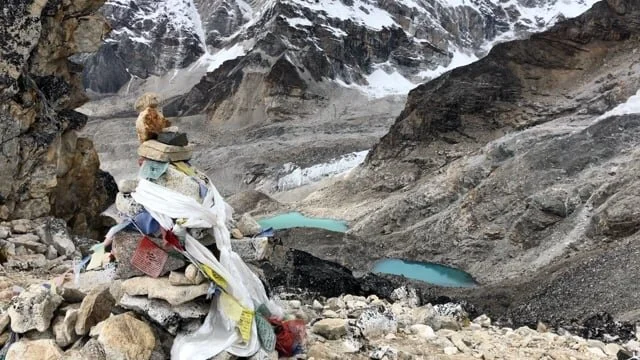
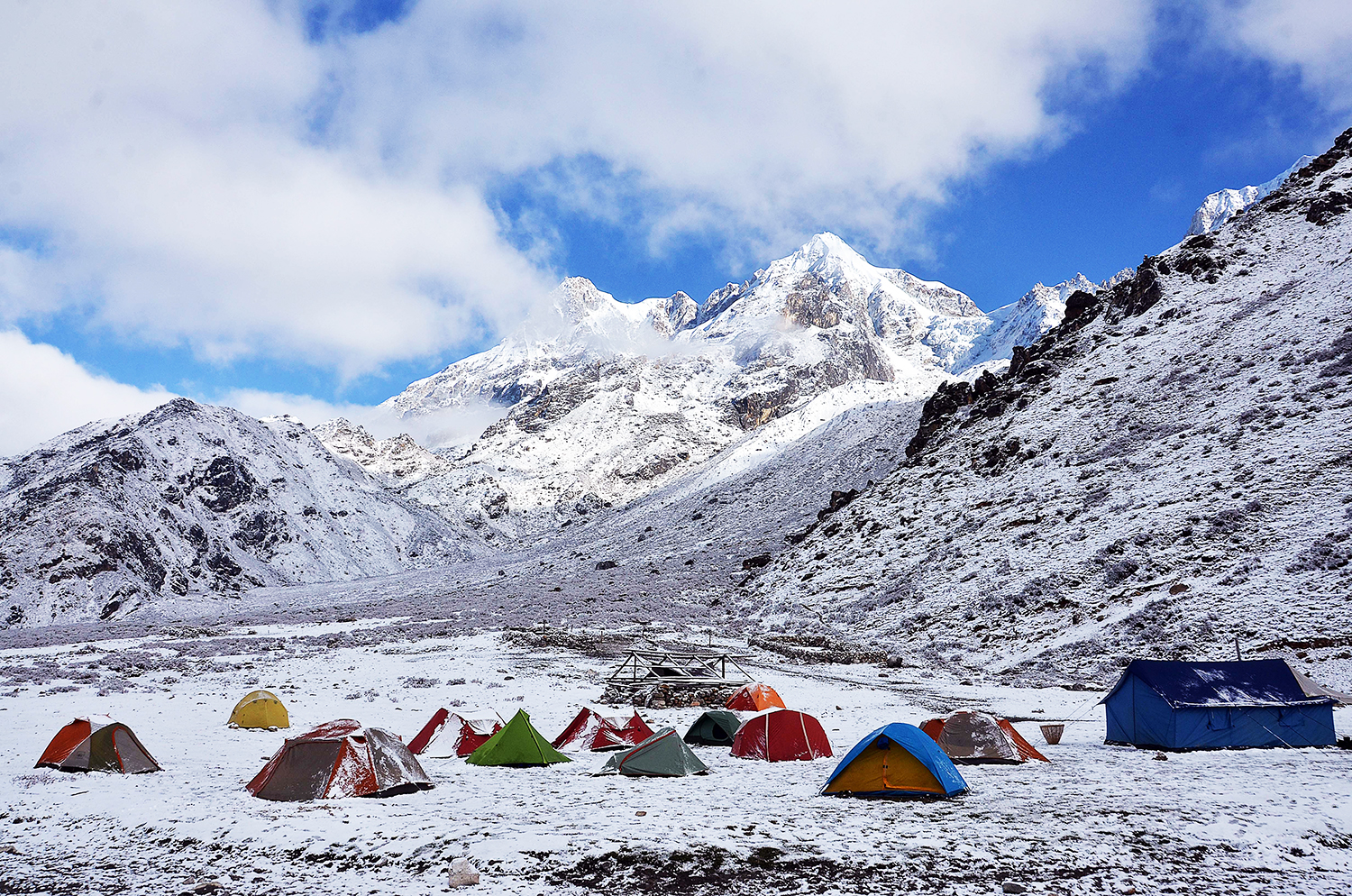
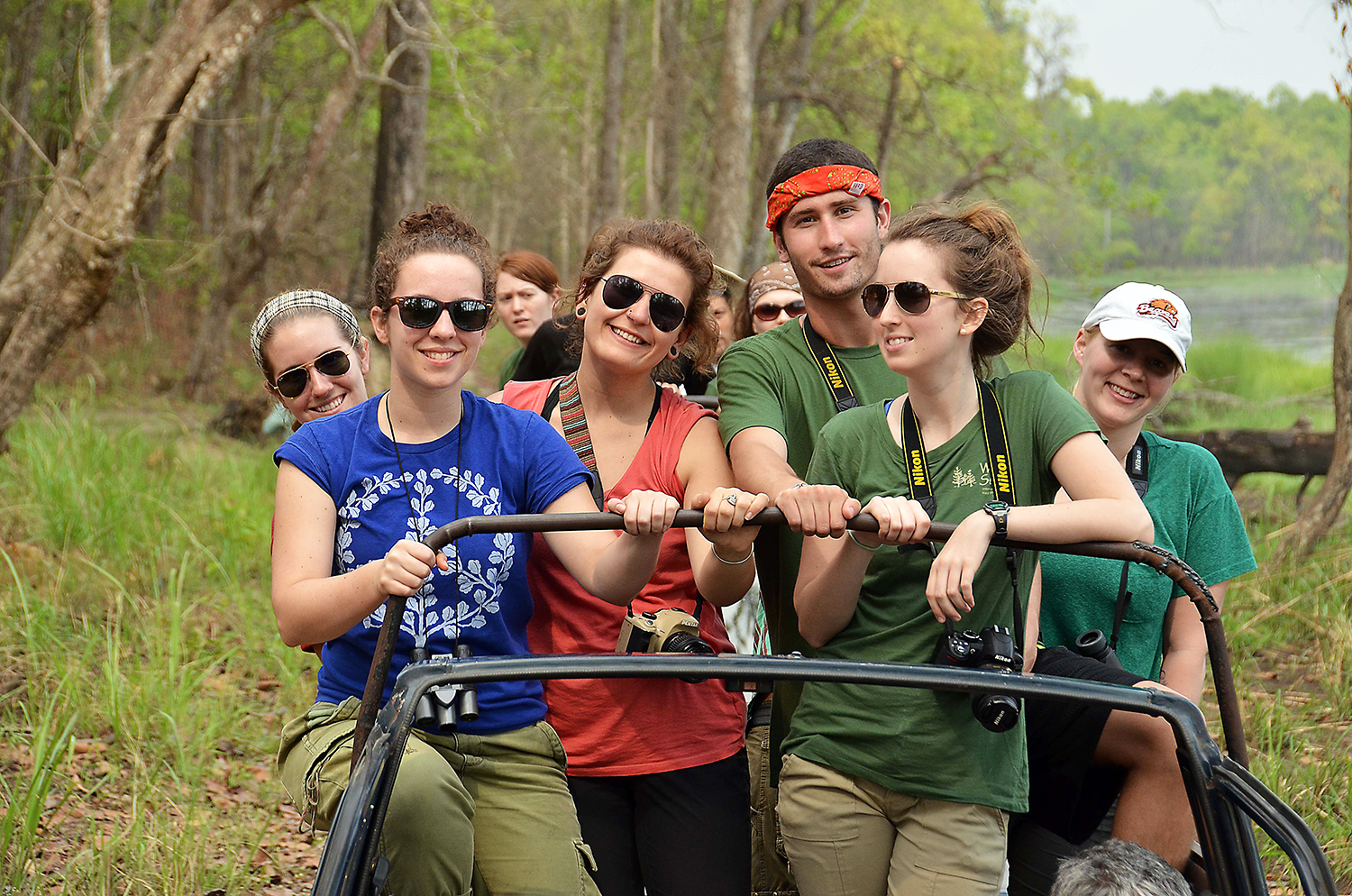
Students on the Nepal program will journey through the foothills, high mountains, and lowland plains to study habitats, climatic zones, wildlife, and the ecological vulnerabilities of this dynamic region. Although our program field sites may vary between years, highlights include a multi-week trek through the mighty Himalaya, a mountain range spanning five countries with dramatic peaks, many of which are considered sacred by locals; learning how plants and animals adapt to extreme conditions, while ascending from subtropical river valleys through temperate forests to the margins of active glaciers; contributing to a long-term forest monitoring project by identifying tree species and recording habitat quality at different elevations; searching for tracks, scat, and other signs of Himalayan wildlife, and observing birds in a region renowned for its avian diversity; meeting villagers whose lifestyles range from terraced farming to high-elevation herding, while learning how roads, migration, and changing markets are transforming mountain life; discovering the rich biodiversity of Chitwan National Park, home to the one-horned rhinoceros and Asian elephant, while completing wildlife surveys surrounded by a dense jungle landscape; and examining how community-based conservation, climate change, and glacial retreat are affecting the people, wildlife, and ecosystems of the region.
By the end of the program, students will have a comprehensive understanding of the ecology and habitat requirements of key Himalayan wildlife, how mountain ecosystems are shaped by elevation and climate, and how local communities are responding to rapid social and environmental change. Students will leave with practical field skills, including flora and fauna identification, methods for conducting wildlife surveys, and experience designing and presenting a research project, and they will have developed a deep respect for the people who live in this special part of the world.

Academic Syllabus

Student Program Manual

Stories From the Field

Kassidy Haluska
Nepal 2019 alumni
“My Wildlands Nepal trip was the most enriching experience I’ve ever had. I was amazed at how much of the country and culture I got to see. By the time I was leaving it felt like home, yet still somehow it was exciting and new the whole time. The immersive nature of the program made it so that work, play, and exploration were all blended together. I didn’t realize going into it how incredible it would be to see all of the plants, animals, mountains, and rivers that we learned about in our lessons in real life. Everything clicked together in a cohesive way because we were living among the ecosystems the whole time we were learning about them. Whenever we were on the trail and had a question about something we saw, we would just ask an instructor and they could tell us all about what we were seeing. Everything connected. We traveled with Nepali people, ate their food, learned about their traditions. We hiked more than I have hiked in my lifetime. We saw the most incredible mountain views I have ever seen. And at the end we felt like a family.”
View fullsize
![]()
Watch Kassidy’s Video






Charles Chris Carpenter
Lead instructor-Fall 2026PhD in Biological Ecology, UC Davis, 1991
Chris is a conservation scientist who has conducted field studies and led natural history expeditions in Asia for over twenty years. His main academic focus is the ecology and geodynamics of mountain environments. He is also interested in the marine world, environmental control of species richness and strategies for habitat conservation. He lives in Chiang Mai, Thailand, and teaches part of the year at Payap University. Chris has been teaching with Wildlands Studies since 1990 and has taught in China, India and Southeast Asia. He currently leads our Nepal program.

Narayan Prasad Koju
Lead instructor-Spring 2027 onwardPhD in Ecology and Evolutionary Biology, Kunming Institute of Zoology, 2017
Narayan is an ecologist and conservation scientist specializing in the biodiversity of the Himalayas. His research focuses on wildlife ecology, species interactions, and human–wildlife dynamics. He has extensive experience in high-altitude ecosystems and is involved with long-term studies across Nepal investigating snow leopards, common leopards, Himalayan wolves, musk deer, pangolins, primates, and pikas. His work integrates field-based research with community-based conservation. He works as a Professor at Nepal Engineering College, Pokhara University, and is an affiliate Professor at the University of Washington. He also collaborates internationally as a visiting scientist. As a Lead Instructor for Wildlands Studies, he provides hands-on field training and interdisciplinary teaching that engages students in the biodiverse Himalayan landscapes and unique cultures of the region. Narayan will lead our Nepal program starting Spring 2027.
